




UDC 140+130.2
DOI 10.20339/AM.03-26.031
Mzia J. Kuparashvili, D.Sc. in Philosophy, Professor, Departments of Theology, Philosophy and World Cultures, Dostoevsky Omsk State University, SPIN-code: 4464-6040, AuthorID: 361219, e-mail: kuparashvili@rambler.ru
Despite the abundance of terminology that attempts to reflect the current state of the worldview after the declared death of postmodernism, the term ‘metamodern’ by Timotheus Vermeulen and Robin van den Akker has taken on a special significance. It is difficult to say whether this is a coincidence or the result of a well-executed PR campaign, but it has gained a reputation as the most popular and sought-after movement, offering its own language for describing the socio-cultural landscape from art to politics. However, upon closer examination, analysts were disappointed by the lack of substance in metamodernism, the vagueness and poverty of its terminology, and the complete absence of a coherent thinking strategy. This led to criticism, sometimes quite harsh, on the one hand, and continued promotion and popularization on the other. The declarative statements about the new sensibility of the era could not become the basis for either post-irony, or new art, and even more so for a new philosophy, which is completely absent in the metamodern. The expectation of the public, included in the problem, was deceived, because after the death of postmodernism, everyone was waiting for a worthy replacement. Nevertheless, the relevance of the very situation in which this drama is being played out is still important. The example of the metamodernist popularity has shown the deep need for a thorough analysis of postmodernism itself and its limits. The play of terms makes both the voids in the reflection of important problems and the dangers of those light tools of manipulation that take an active part in the creation of sophisticated and radical technologies of mass management, obvious.
Keywords: Timotheus Vermeulen, Robin van den Akker, oscillation, structure of feeling, historical turn, ethical turn, ethical value system, new sincerity, J. Deleuze, marketing
References
1. Hutchteon, L. The Politics of Postmodernism. New York, London: Routledge, 2003. 232 p.
2. Metamodernism. Historicity, Affect, and Depth after Postmodernism. Moscow: RIPOL Classic, 2022. 496 p.
3. Morozov, A.V. Caution, Metamodernism: Modernity as an Umbrella and a Pendulum. Galaxy Media: Journal of Media Studies. 2019. No. 3. Pp. 238–249. https://doi.org/10.24411/2658-7734-2019-10032
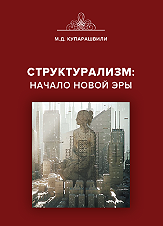
4. Kuparashvili, M.J. Structuralism: The Beginning of a New Era. Moscow: Almavest, 2022. 208 p.
5. Vermeulen, T., Akker van den, R. Notes on Metamodernism. URL: https://metamodernizm.ru/notes-on-metamodernism/
6. Kuparashvili, M.J. On the Need for a New Ontology. Innovative Economy and Society. 2025. No. 2. Pp. 96–107.
7. Pavlov, A. Post-Postmodernism: How Social and Cultural History Explain Our Times. Moscow: Delo Publishing House, Russian Academy of National Economy and Public Administration, 2023. 584 p.
8. Sundukov, N. Interview with Robin van den Akker. URL: https://metamodernizm.ru/robin-van-den-akker/
9. Bewes, T. Cynicism and Postmodernity. Moscow: MD “KDU,” 2016. 270 p.
10. Baudrillard, J. What Sense Does It Make for a Philosopher to Believe in Reality? (Conversation with Jerry Culter). Khora. 2009. No. 2 (8). Pp. 148–163.
11. Deleuze, G. On New Philosophers and a More General Problem. In: May 68 Did Not Happen. Moscow: Ad Margini Press, 2016. 96 p. Article from 1977. Pp. 53–64.
12. Sednin, A. What Does Metamodernism Keep Silent About? URL: https://metamodernizm.ru/%D0%BE-%D1%87%D1%91%D0%BC-%D0%BC%D0%BE%D0%BB%D1... D0%B5%D1%82%D0%B0%D0%BC%D0%BE%D0%B4%D0%B5%D1%80%D0%BD/
13. Lyotard, J.-F. Postmodernism Explained to Children. Moscow: Humanitarian University, 2008. 152 p.


.png)